
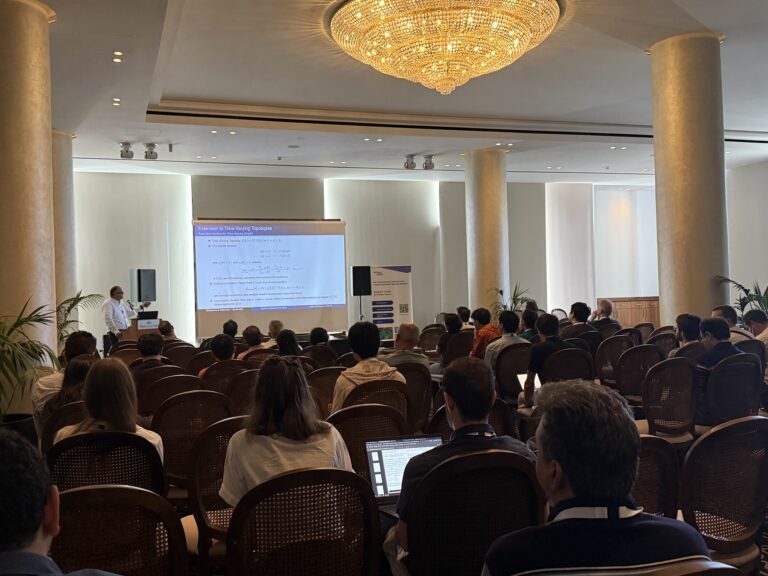
Sustainable Exploration, a New Paradigm – summary session

Mario Arancibia is an experienced geologist with a strong background in mineral deposits and project development, specializing in copper, gold and base metal mineral exploration across diverse geological scenarios such as Chile, Perú, Argentina, Panama and Canada. His career spans over 17 years in key roles with major mining companies where he led exploration and drilling programs, mine support, and technological implementations. Currently part of Muon Solutions Oy in Finland, Mario leads the development of innovative geoscience projects and provides technical expertise in applied technologies.
Summary of presentation, part 1 Muography
The exploration of critical raw materials has played a crucial role in human development, serving as a foundation for our standard of living. As new technologies become increasingly present in our daily lives, the challenge of sourcing primary elements critical to numerous modern needs grows. The world must extract more materials while minimizing environmental impact, by adopting sustainable and efficient practices that define the future standards of the industry.
Considering this premise, muography, a new technology is progressively being developed and applied to mineral exploration, which is the first part in the supply chain of critical raw materials.
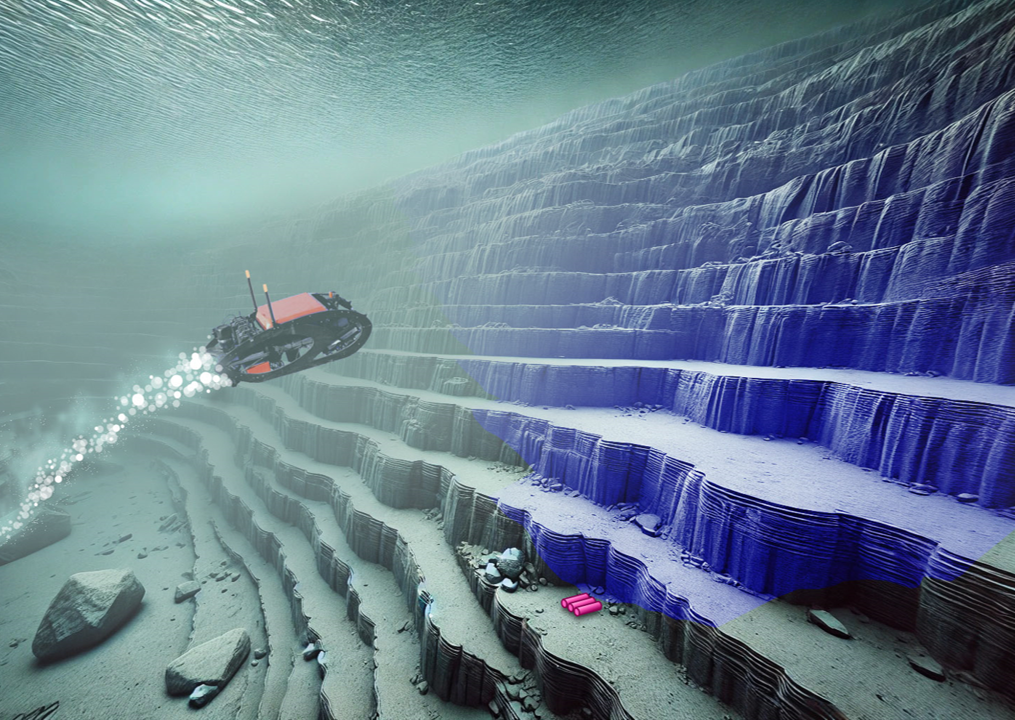
Moreover, muography will be utilized as subaqueous methods with the aid of underwater robots. These innovations are set to improve efficiency and accuracy in exploring mineral resources plus reducing the environmental footprint of these activities.
Muography utilizes muons which are cosmic particles generated in the upper atmosphere of the earth, usually regarded as “heavy electrons”, traveling at 95-99% speed of light generating a constant flux on the earth surface. By measuring the difference between the muon flux which is directly related to the material’s density.
When applying muography, detectors map the density distributions by measuring muon flux in different directions. Imaged objects can be as big as pyramids or volcanoes, and as small as a few meters in across. It is a safe method as there are no radiation sources, no man-made geophysical fields, no explosives and complementary to conventional geophysical methods (e.g., gravity, seismics).
Muography applied to mineral exploration can provide valuable information to enhance Target discovery, drilling optimization, lithological characterization, structural mapping, improving model uncertainty among others.
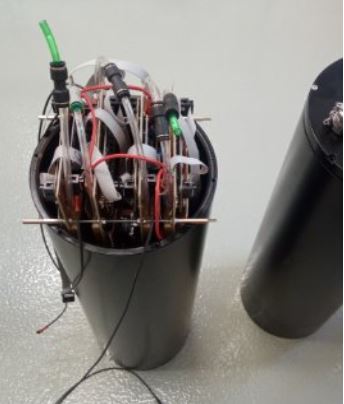
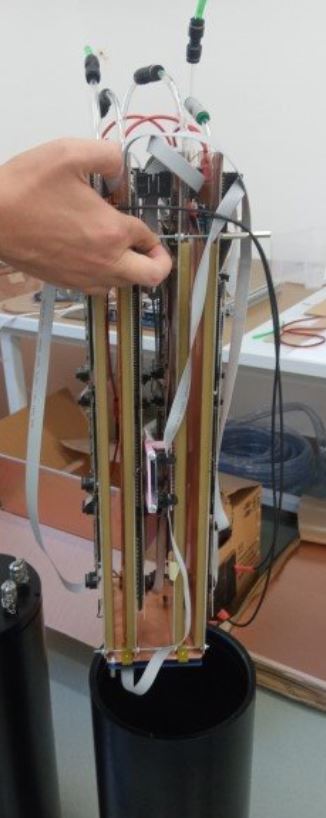
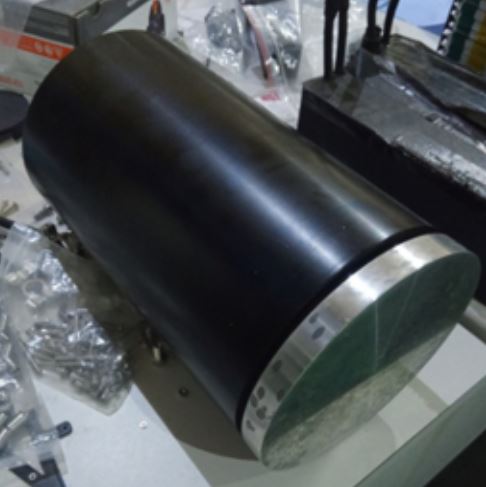
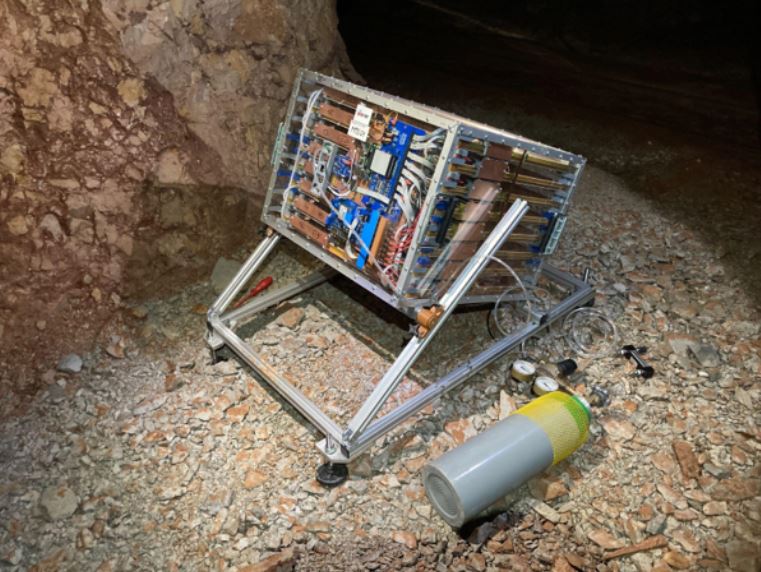
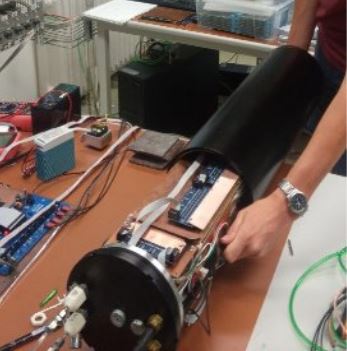
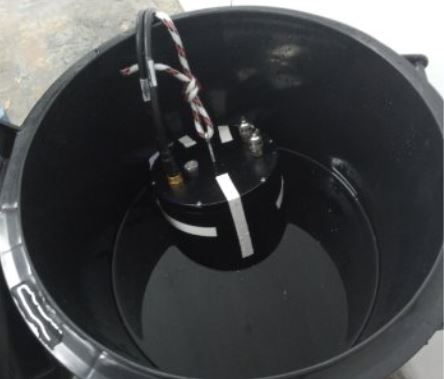
In the context of MINE.IO we are applying muography in flooded mines. Closed mines may still contain valuable resources which can be explored using these new methodologies, in compliance with eco-efficient technological solutions for ore sourcing. The prototype of a sealed muon detector is ongoing with successful results and soon to be tested in a Pilot site located in Portugal.
While general perception about mining industry on construction time for a new mine is quite accurate with real timing, it appears also positive on discoveries success rate, truth is that more than 99,5% of exploration and cost of discovering a new mineral deposit has tripled. These technology innovations supports the efficiency in resources use in mineral exploration.
There is general consensus and powerful reasons given by the general audience as why is it important to revitalize old mines and re-open when it’s necessary.
Unveiling Hidden Worlds: The Power of Muography in Modern Science
Scientists are constantly seeking non-invasive ways to explore into the unknown. One groundbreaking technique is muography, which uses muons elementary particles from cosmic rays to peer inside large objects and structures.
What Is Muography?
Muography detects how muons interact with matter. These particles, are generated in the upper atmosphere and are similar to electrons but heavier, penetrate dense materials, making them ideal for imaging objects like volcanoes, ancient structures, geological materials and nuclear reactors without physical intrusion.
How Does It Work?
Muons naturally rain down on Earth. By placing detectors along their path, scientists measure how muons are blocked or scattered, generating something similar as a X-ray image revealing internal structures of objects.
Applications of Muography
1. Geology and Volcanology: Muography helps study magma chambers and predict eruptions, as seen with Mount Fuji and Mount Aso in Japan. It also provides geological feature imaging such as dense bodies or faults, among others.
2. Archaeology: It uncovers hidden structures without damage, like the discovery of a large cavity in the Great Pyramid of Giza.
3. Nuclear Safety: Muons inspect nuclear reactors and storage facilities, ensuring safety and integrity.


The Future of Muography
As detector technology and computational methods advance, muography’s potential grows. Its non-invasive, high-resolution capabilities are revolutionizing fields from archaeology to nuclear safety.
Muography is transforming scientific exploration, offering unprecedented insights into both natural and man-made structures. With ongoing advancements, its applications will continue to expand, opening new doors to knowledge.
Let us know what you think in the comments and share your thoughts with us!


Leave a Reply